

jma_logo Welcome to TCC wmo_logo
Home
World Climate
Climate System Monitoring
El Niño Monitoring
NWP Model Prediction
Global Warming
Climate in Japan
Training Module
Press release
Links
HOME >Climate System Monitoring > Monthly Highlights on the Climate System

Monthly Highlights on the Climate System

'Monthly Highlights on the Climate System' has been issued since March 2007 as a monthly bulletin focusing on the monthly highlights of the monitoring results.

Notice: Products have been upgraded from PDF to HTML format starting from the issue of May 2025 for improved accessibility.


Highlights in January 2026

- In the tropical Pacific, remarkably positive sea surface temperature (SST) anomalies were observed in the western region, while negative anomalies were observed along the equator from the central to eastern regions, indicating a La Niña-like pattern. The NINO.3 index was -0.4°C. Significantly positive SST anomalies were also observed in the mid-latitude North Pacific and the subtropical North Atlantic.
- In the tropics, extremely enhanced convective activity was observed along the latitude bands near 10°S and 20°N from the Maritime Continent to the western Pacific. The convectively active phase of the Madden-Julian Oscillation developed over the western Pacific in the middle of the month and propagated eastward to South America toward the end of the month. The global-scale divergence anomaly exhibited a wave-number-1 pattern, with its center located over the Pacific.
- In the tropical upper troposphere, a pair of anticyclonic anomalies was dominant from the Maritime Continent to the western Pacific, while a pair of cyclonic anomalies was observed from the central to the eastern Pacific.
- In the tropical lower troposphere, a pair of cyclonic anomalies was significantly observed from the eastern Indian Ocean to the western Pacific. Sea level pressure anomalies were negative over the western Pacific, with particularly strong negative values east of the Philippines, while positive anomalies prevailed over the Indian Ocean and from the central to the eastern Pacific. The Southern Oscillation Index (SOI) was +0.9.
- In the Northern Hemisphere, the zonal-mean subtropical jet shifted northward and the polar-front jet shifted southward relative to their climatological positions, and westerlies were stronger than normal between 35°N and 50°N.
- In the 500-hPa height field, the polar vortex split, with its centers located over eastern Canada and the Far East. Significantly positive height anomalies dominated the high latitudes, accompanied by well-developed blocking highs over Greenland and eastern Siberia. In the mid-latitudes, a wave-number-3 anomaly pattern was observed, with negative anomalies over the Far East, eastern North America, and western Europe.
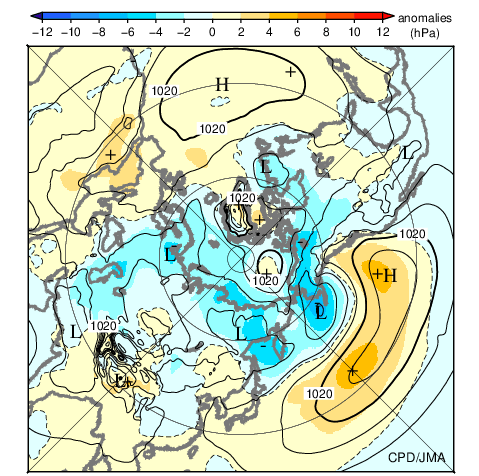
- In the sea level pressure(SLP) field, a negative Arctic Oscillation pattern was dominant, with significantly positive anomalies in the high latitudes and generally negative anomalies in the mid-latitudes. The Siberian High developed over northern Eurasia, but its eastward extension into East Asia was weaker than normal. The Aleutian Low shifted westward relative to its climatological position, and significantly negative SLP anomalies were observed over the Sea of Okhotsk. The Icelandic Low shifted southward relative to its climatological position and was stronger than normal in its southeastern sector, with significantly negative SLP anomalies over western Europe. The winter monsoon over Japan was stronger than normal.
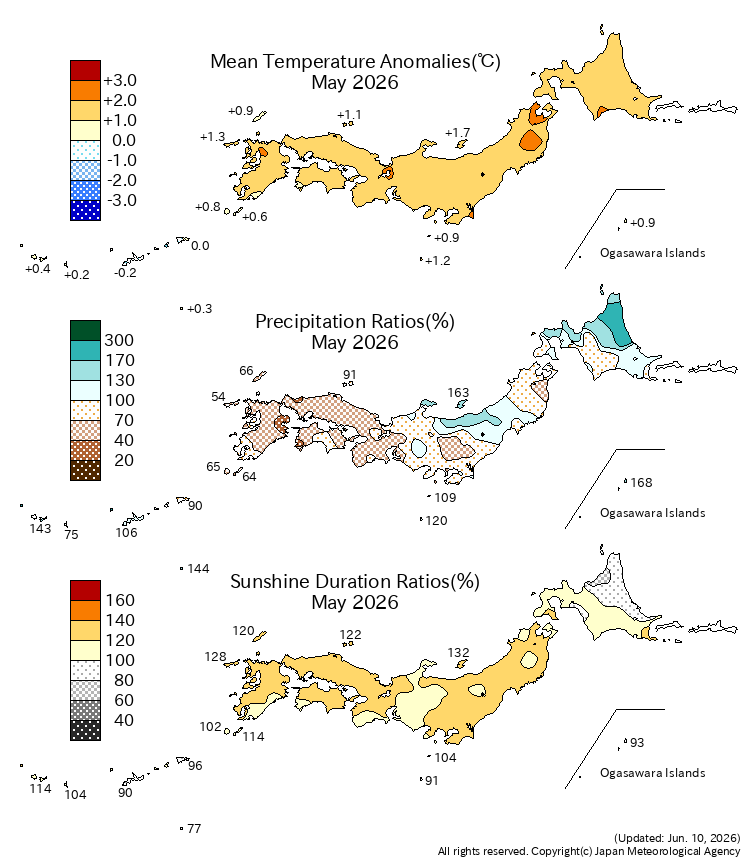
- Below-normal temperatures were observed in northern Japan, while other parts of the country experienced near-normal temperatures. The monthly anomaly of the average surface temperature over Japan was -0.17°C. Precipitation amounts were significantly above normal on the Sea of Japan sides of northern and eastern Japan, while they were significantly below normal in western Japan, the Pacific side of eastern Japan, and Okinawa/Amami, and below normal on the Pacific side of northern Japan. Sunshine durations were significantly above normal in western Japan, the Pacific side of eastern Japan, and Okinawa/Amami, and above normal on the Pacific side of northern Japan, while it was below normal on the Sea of Japan sides of northern and eastern Japan.

Climate in Japan (Fig. 1):

- The monthly anomaly of the average surface temperature over Japan was -0.17°C . On a longer time scale, the average surface temperatures have risen at a rate of about 1.14°C per century in January.
- On the Sea of Japan side of northern/eastern Japan, monthly precipitation amounts were significantly above normal and monthly sunshine durations were below normal. Monthly snowfall amounts were significantly above normal on the Sea of Japan side of northern Japan and above normal on the Sea of Japan side of eastern Japan. The regions were frequently affected by the winter monsoon and low-pressure systems.
- On the Pacific side of eastern/western Japan, on the Sea of Japan side of western Japan and in Okinawa/Amami, monthly precipitation amounts were significantly below normal and monthly sunshine durations were significantly above normal. Monthly precipitation amounts were the smallest on the Pacific side of western Japan and on the Sea of Japan side of western Japan on record for January since 1946. Monthly sunshine durations were the longest on the Pacific side of eastern/western Japan on record for January since 1946, and the tied for the longest on the Sea of Japan side of western Japan. On the Pacific side of northern Japan, monthly precipitation amounts were below normal and monthly sunshine durations were above normal. Monthly snowfall amounts were below normal on the Pacific side of northern/eastern Japan. The regions were less affected by low-pressure systems and frequently covered by high-pressure systems.
- Monthly mean temperatures were below normal in northern Japan due to cold air inflow.

World Climate:

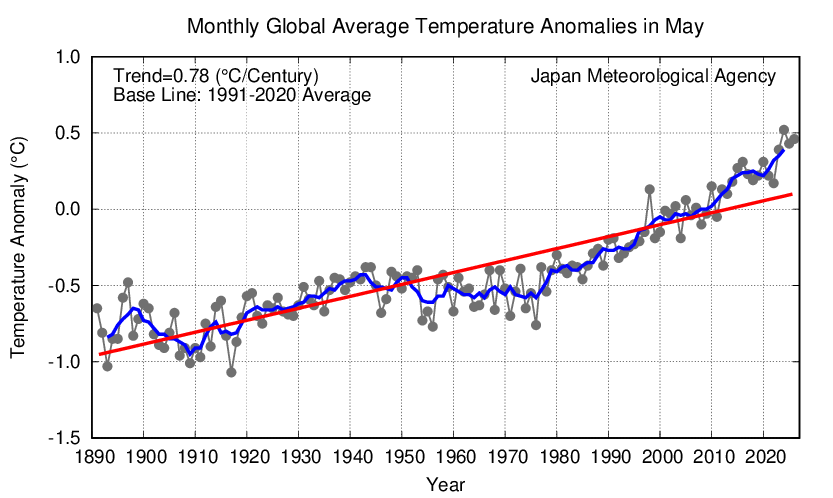
- The monthly anomaly of the global average surface temperature (i.e., the combined average of the near-surface air temperature over land and the SST) was +0.37°C (5th warmest for January since 1891) (preliminary value) (Fig. 2). On a longer time scale, global average surface temperatures have risen at a rate of about 0.85°C per century in January (preliminary value).
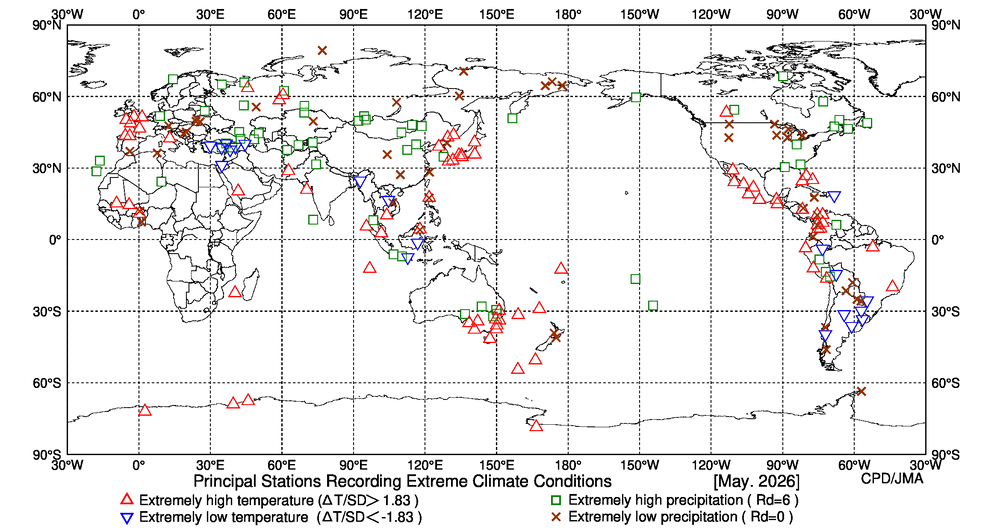
- Extreme climate events were as follows (Fig. 3).
  - Monthly mean temperatures were extremely high in Eastern Siberia and in Mexico.
  - Monthly mean temperatures were extremely low from eastern to northern Europe.
  - Monthly precipitation amounts were extremely high from Western Russia to western Europe and from Jamaica to Colombia.
  - Monthly precipitation amounts were extremely low from Eastern Japan to the southern Korean Peninsula, in and around the Malay Peninsula and from southern Brazil to northeastern Argentina.

Oceanographic Conditions:

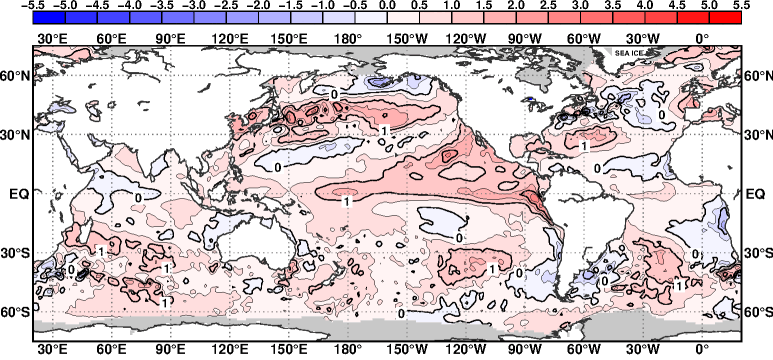
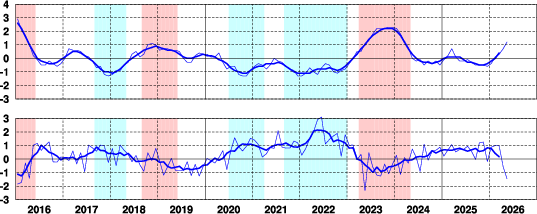
- In the equatorial Pacific, negative SST anomalies were observed from the central to eastern parts, and remarkably positive SST anomalies were observed in the western part (Fig. 4). The monthly mean SST anomaly averaged over the NINO.3 region was -0.5°C and the SST deviation from the latest sliding 30-year mean over the region was -0.4°C (Fig. 5).
- In the North Pacific, remarkably positive SST anomalies were observed in a wide area of the tropics to mid-latitudes, while remarkably negative SST anomalies were observed around the South China Sea.
- In the South Pacific, remarkably positive SST anomalies were observed in the western part and in the eastern part of the mid-latitudes, while remarkably negative SST anomalies were observed in the central part of the mid-latitudes.
- In the Indian Ocean, remarkably positive SST anomalies were observed in the eastern part of the tropics except in the equatorial region, and remarkably negative SST anomalies were observed in the northwestern part of the tropics.
- In the North Atlantic, remarkably positive SST anomalies were observed from the western to central parts of the tropics and in the high latitudes.
- In the South Atlantic, remarkably positive SST anomalies were seen in a wide area except in the western part of the mid-latitudes.

Tropics:

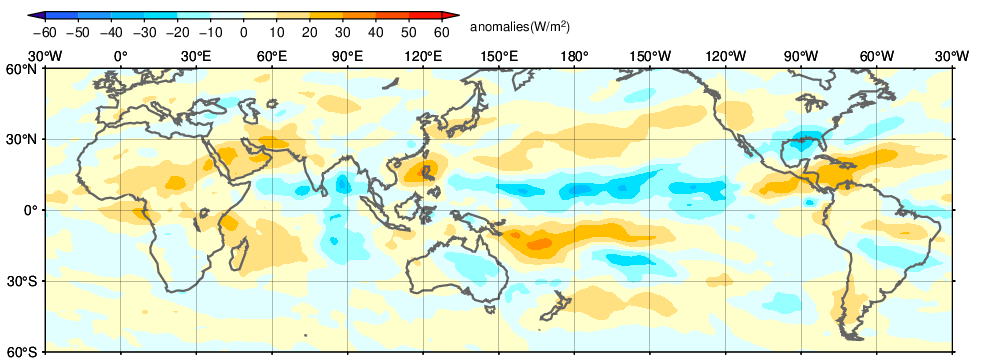
- Convective activity was enhanced over the latitude band of 10°S from the eastern Indian Ocean to the western Pacific and from around the Philippines to the latitude band of 20°N in the Pacific, and suppressed over the equatorial Indian Ocean and the equatorial western Pacific (Fig. 6).
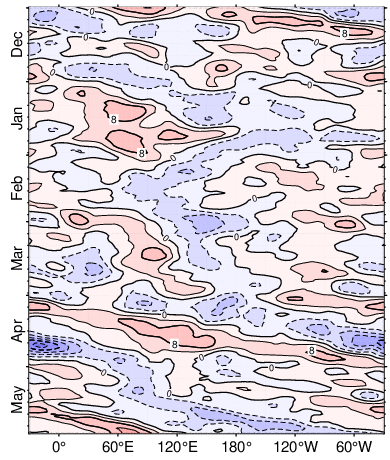
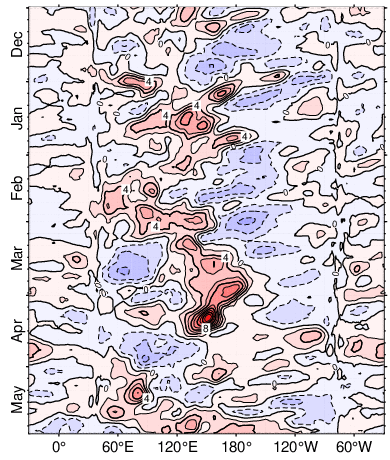
- The active phase of equatorial intraseasonal oscillation propagated eastward from the Pacific to South America in the second half of January (Fig. 7).
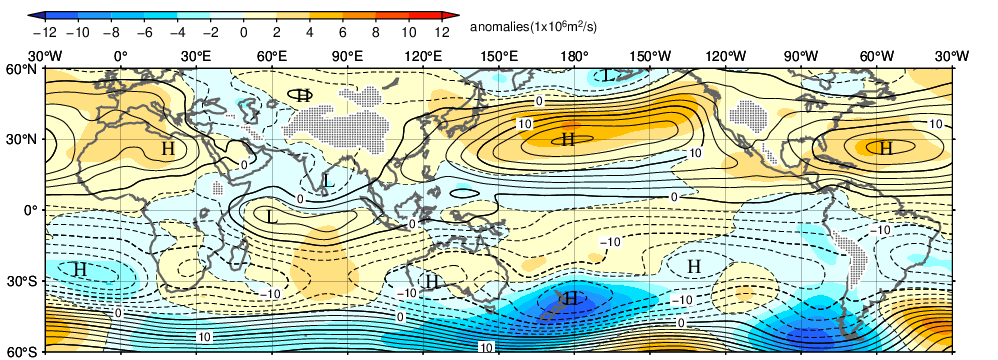
- In the upper troposphere, anticyclonic circulation anomalies straddling the equator were seen around Indonesia, and cyclonic circulation anomalies straddling the equator were seen from the central to eastern Pacific. A wavy anomaly pattern was seen along the subtropical jet over Eurasia, accompanied by anticyclonic circulation anomalies over southern China and cyclonic circulation anomalies over the southern Middle East and around Japan (Fig. 8).
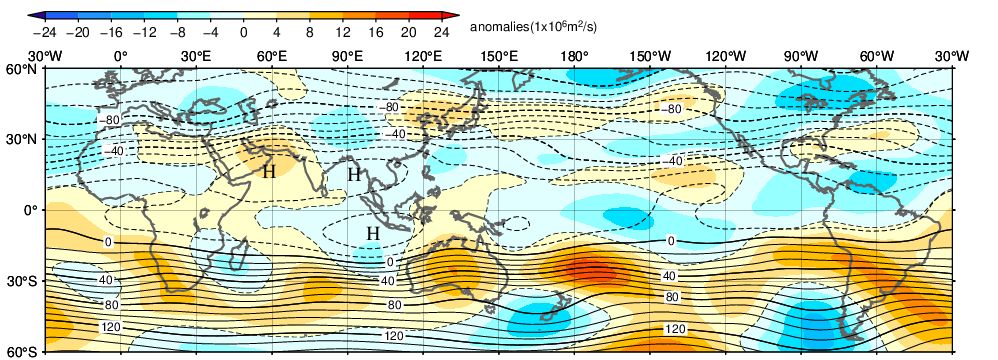
- In the lower troposphere, cyclonic circulation anomalies straddling the equator were seen from the eastern Indian Ocean to the western Pacific, and anticyclonic circulation anomalies straddling the equator were seen over the central Pacific (Fig. 9).
- In the sea level pressure field, positive anomalies were seen over the Indian Ocean and from the central to eastern equatorial Pacific. Negative anomalies were seen over the western Pacific, with the marked anomalies to the east of the Philippines. The Southern Oscillation Index value was +0.9 (Fig. 5).

Extratropics:

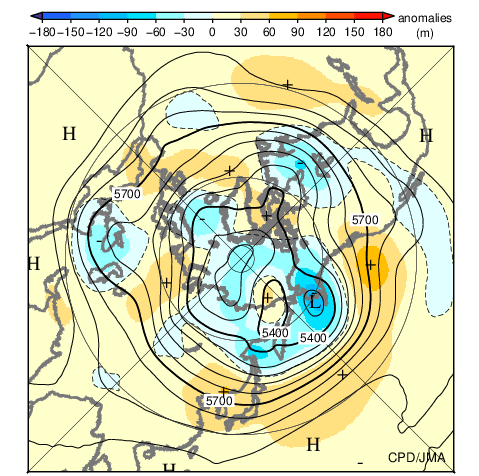
- In the 500-hPa height field (Fig. 10), negative anomalies were seen over eastern North America and eastern East Asia, where the split polar vortices were located. In contrast, significant positive anomalies were seen around Greenland and over Eastern Siberia, where the blocking high developed, and a negative Arctic Oscillation prevailed.
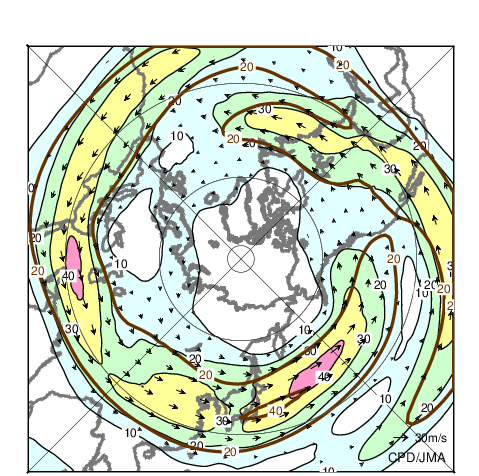
- The zonally-averaged subtropical jet stream shifted northward compared to the climatological normal. In the Far East, the polar-front jet stream meandered southward due to a split polar vortex and westerly winds were stronger than normal over Japan (Fig. 11).
- In the sea level pressure field (Fig. 12), significant positive anomalies were seen in the high-latitudes. In the mid-latitudes, positive anomalies were seen to the south of the Aleutian Islands and western North America, while negative anomalies were seen in a wide area of other regions, with a significant negative anomaly around Europe.
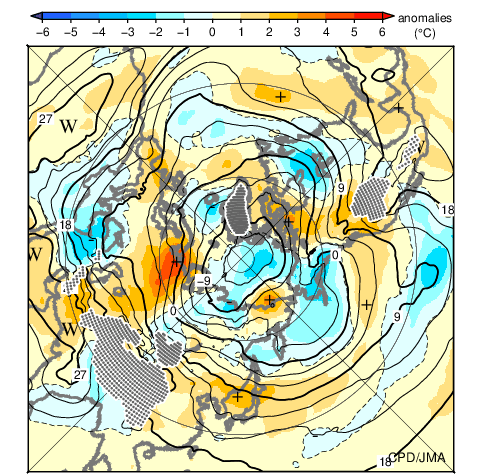
- In the 850-hPa temperature field (Fig. 13), significant positive anomalies were seen around Greenland, Eastern Siberia, from the central North Pacific to western North America, the central North Atlantic and northern Africa, and negative anomalies were seen from northern Europe to Japan via Central Siberia and eastern North America.

Zonal mean:

- In the zonal mean zonal wind in the troposphere, the subtropical jet stream in both hemispheres shifted poleward compared to the climatological normal. Easterly wind anomalies were seen between 50°N and 75°N.
- The zonal mean temperatures in the troposphere were mostly above normal. The zonal mean temperatures in the middle stratosphere were below normal in the Northern Hemisphere, except for around 40°N and the equatorial region.

Supplemental information

- Climate Anomaly Table over Japan
- Extratropics in the Southern Hemisphere
- Snow in the Northern Hemisphere
- Arctic sea ice (link to the National Snow and Ice Data Center)

Fig.1 Monthly climate anomaly/ratio over Japan (January 2026)
Top: temperature anomalies (degree C)
Middle: precipitation ratio (%)
Bottom: sunshine duration ratio (%)
The base period for the normal is 1991-2020.


Fig.2 Long-term change in monthly anomalies of global average surface temperature in January
The thin black line indicates anomalies of the surface temperature in each year. The blue line indicates five-year running mean, and the red line indicates a long-term linear trend. Anomalies are deviations from the 1991-2020 average.


Fig.3 Distribution of extreme climate stations (January 2026)


Fig.4 Monthly mean sea surface temperature anomaly (January 2026)
The contour interval is 0.5 degree C. The base period for the normal is 1991-2020. Maximum coverage with sea ice is shaded in gray.


Fig.5 Time series of monthly mean SST departure (degree C) from the reference value defined as the immediate past 30-year mean SST averaged over the NINO.3 region (upper). Time series of the Southern Oscillation Index with respect to the 1991-2020 base period (lower).
Thin blue lines represent monthly means and thick blue lines five-month running means. Periods of El Niño and La Niña events are shown as red-colored and blue-colored boxes, respectively.


Fig.6 Monthly mean Outgoing Longwave Radiation (OLR) anomaly (January 2026)
The shading interval is 10 W/m2. The base period for the normal is 1991-2020. Original data (CPC Blended OLR) are provided by NOAA.

Fig.7 Time-Longitude cross section (5°N-5°S) of five-day running mean 200-hPa velocity potential anomaly (left) and 850-hPa zonal wind anomaly (right) (August 2025 - January 2026)
The contour intervals are 4x10⁶ m2/s (left) and 2 m/s (right). The base period for the normal is 1991-2020.


Fig.8 Monthly mean 200-hPa stream function and anomaly (January 2026)
The contour interval is 10x106 m2/s. The base period for the normal is 1991-2020.


Fig.9 Monthly mean 850-hPa stream function and anomaly (January 2026)
The contour interval is 2.5x10⁶ m2/s. The base period for the normal is 1991-2020.


Fig.10 Monthly mean 500-hPa height and anomaly in the Northern Hemisphere (January 2026)
The contours show 500-hPa height at intervals of 60 m. The shading indicates its anomalies. The base period for the normal is 1991-2020.

Fig.11 Monthly mean 200-hPa wind speed and vectors in the Northern Hemisphere (January 2026)
The black lines show wind speed at intervals of 20 m/s. The brown lines show its normal at intervals of 40 m/s. The base period for the normal is 1991-2020.

Fig.12 Monthly mean sea level pressure and anomaly in the Northern Hemisphere (January 2026)
The contours show sea level pressure at intervals of 4 hPa. The shading indicates its anomalies. The base period for the normal is 1991-2020.

Fig.13 Monthly mean 850-hPa temperature and anomaly in the Northern Hemisphere (January 2026)
The contours show 850-hPa temperature at intervals of 4 degree C. The shading indicates its anomalies. The base period for the normal is 1991-2020.

Back Number


The descriptions from May-2011 to April-2021 issue are based on the former climatological normal (1981-2010 average).
In the descriptions until April-2011 issue, 1979-2004 average is used as climatological normal unless otherwise stated.
The descriptions until January-2014 issue are based on the JRA-25/JCDAS datasets.
The descriptions from February-2014 to April-2023 issue are based on the JRA-55 reanalysis.

Figures and Tables

Notice: Products based on JRA-3Q were updated to those with improved quality in terms of tropical cyclone analysis. OLR-related products from January 1991 are based on NOAA CPC Blended OLR (CBO).

Notice: Figures of 'Atmospheric Circulation', 'Time Cross Section', and 'Indices' have been revised with improved quality data regarding tropical cyclone analysis. (18 June 2024)

Notice: Depending on the availability of NOAA CPC Blended OLR (CBO) data, updates may be delayed or figures may be filled with gray indicating data missing.


If you would like to subscribe to Monthly Highlights on the Climate System, please send an email to

with your name, affiliation, country and email address.
page top

Tokyo Climate Center, Climate Prediction Division.
Copyright(C) 2002. Japan Meteorological Agency. - Legal Notice -