
Japanese
Home > Weather, Climate & Earthquake > Data of Oceanographic and Marine Meteorological Observation > Ocean Data Buoy Observations

Ocean Data Buoy Observations

JMA operates drifting ocean data buoys. The buoys are equipped with sensors near the sea surface level to measure positioning, air pressure, sea surface temperature and wave height/period.

Data

Year:     Please select a year and click the "Refresh" button.

Each buoy is identified by a code in the format of "yy-nn", where yy represents the year of deployment and nn the consecutive number assigned in order of deployment during the year.

You can view the trackline of each buoy by pointing to the buoy code listed on the right of the figure. Click on the buoy code to see its data.
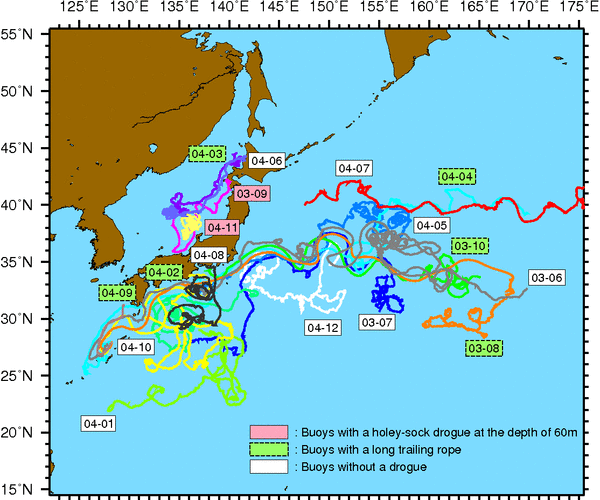

Paths of the Buoys

Track chart of buoys (in 2004)


A drogue is a device attatched to a buoy to slow down its movement so it stays in the area of observation for a long time. JMA uses two types of drogue suitable for the observed sea area: a holey-sock drogue at a depth of 60m, and another one with a long trailing rope that drags on the sea floor.