
Observation stations for greenhouse gases
Global Atmosphere Watch: GAW
The issue of global environment came to be recognized all over the world, and the World Meteorological Organization (WMO) began the Global Atmosphere Watch (GAW) programme in 1989.
The purpose of this programme are as follows:
- Observation of the density of such as greenhouse gases, ozone, aerosol and chemical ingredient in the precipitation.
- Grasp of global atmosphere environment and early detection of the change.
- Inform of the prediction to people.
Observation station classified by GAW programme
Observation station participating in the GAW programme are classified in Global Station and Regional Station by neighboring observation environment.
Global Station is intended to clarify the long-term change on the earth scale of an atmosphere ingredient affecting the weather and the climate, and is not affected by local or regional pollution, and no significant change in the land use of the island is expected to occur during the next several decades.
Regional Station is defined that is regionally representative and is normally free of the influence of significant local pollution sources, and is intended to clarify a change for the long term of an atmosphere ingredient caused by the change of human activities such as regional industrial activity, the land use, the energy use, the use of the forest resource.
GAW Stations for greenhouse gas observation
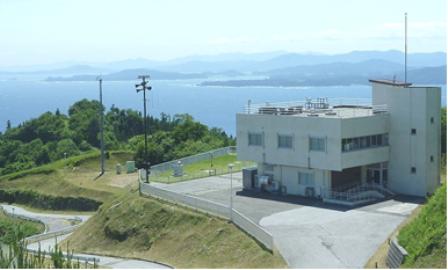
In 1976, the Japan Meteorological Agency (JMA) started the observation of precipitation chemistry and dry deposition at Ryori Station. Ryori Station has the longest observation history of precipitation chemistry and dry deposition in Japan, and has been contributing to the long-term monitoring of acid rain. Later on, global warming caused by the greenhouse effect became a growing concern internationally. In 1987, JMA started the monitoring of atmospheric carbon dioxide (CO2) at Ryori for the first time in Japan as a GAW Regional Station. In 1990, observations for other substances were started successively: CFCs (i.e., CFC-11, CFC-12, and CFC-113), nitrous oxide (N2O), carbon tetrachloride (CCl4), and 1,1,1-trichloroethane (CH3CCl3), which are ozone depleting substances and greenhouse gases; methane (CH4), surface ozone, and carbon monoxide (CO), which are greenhouse or reactive gases.
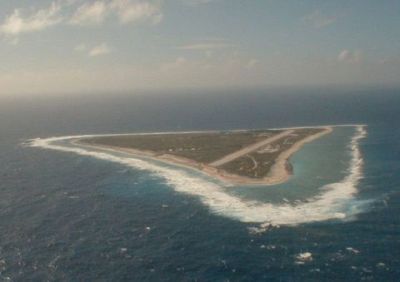
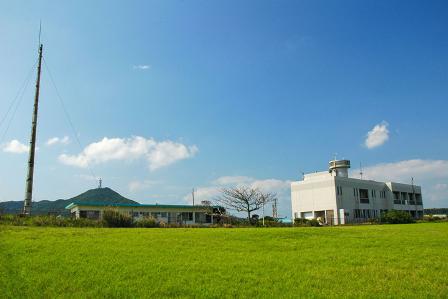
A GAW Global Station with enhanced observation standards as well as monitoring of CO2, CH4, surface ozone, CO, aerosol optical depth and chemical species in precipitation and dry deposition was introduced at Minamitorishima Station between 1993 and 1996, and observation of hydrofluorocarbons was initiated in April 2020. The observation of CO2, CH4, surface ozone, CO, and aerosol optical depth started successively also at Yonagunijima.
|
Table 1: Specification of JMA greenhouse gas observation stations |
| Station Name (GAW ID) | Ryori (RYO) | Minamitorishima (MNM) | Yonagunijima (YON) | Syowa (SYO) | |
|---|---|---|---|---|---|
| Latitude | 39°02'N | 24°17'N | 24°28'N | 69°00'S | |
| Longitude | 141°49'E | 153°59'E | 123°01'E | 39°35'E | |
| Altitude (asl) | 260 m | 7 m | 30 m | 18 m | |
| WMO station number | 47513 | 47991 | 47912 | 89532 | |
| GAW station type | Regional | Global | Regional | Regional | |
| Parameter | CO2 | O | O | O | |
| CH4 | O | O | O | ||
| CO | O | O | O | ||
| Surface Ozone | O | O | O | O | |
| Chlorofluorocarbons (CFCs) | O | ||||
| N2O | O | ||||
| CH3CCl3 | O | ||||
| CCl4 | O | ||||
| Hydrofluorocarbons (HFCs) | O | ||||
| Atmospheric deposition |
O
(Terminated in Dec. 2011) |
O
(Terminated in Dec. 2020) |
|||
| Aerosol optical depth (※) |
O
(Terminated in Mar. 2018) |
O |
O
(Terminated in Mar. 2016) |
O | |
| Aerosol vertical profile |
O
(Terminated in Dec. 2011) |
||||
※Aerosol optical depth is also observed at Abashiri and Ishigakijima stations.
For more information about the stations, please refer to the link below.
Stations
World Meteorological Organization (WMO) and Global Atmosphere Watch (GAW) programme (External Link)